
In-office testing in Fairfax, Virginia
InBody Body Composition Analysis
Hormones influence how your body builds muscle and where it stores fat. An InBody scan in our office estimates both in about a minute, and we read the results together alongside the rest of your care.
Already a patient? Ask about InBody at your next visit.
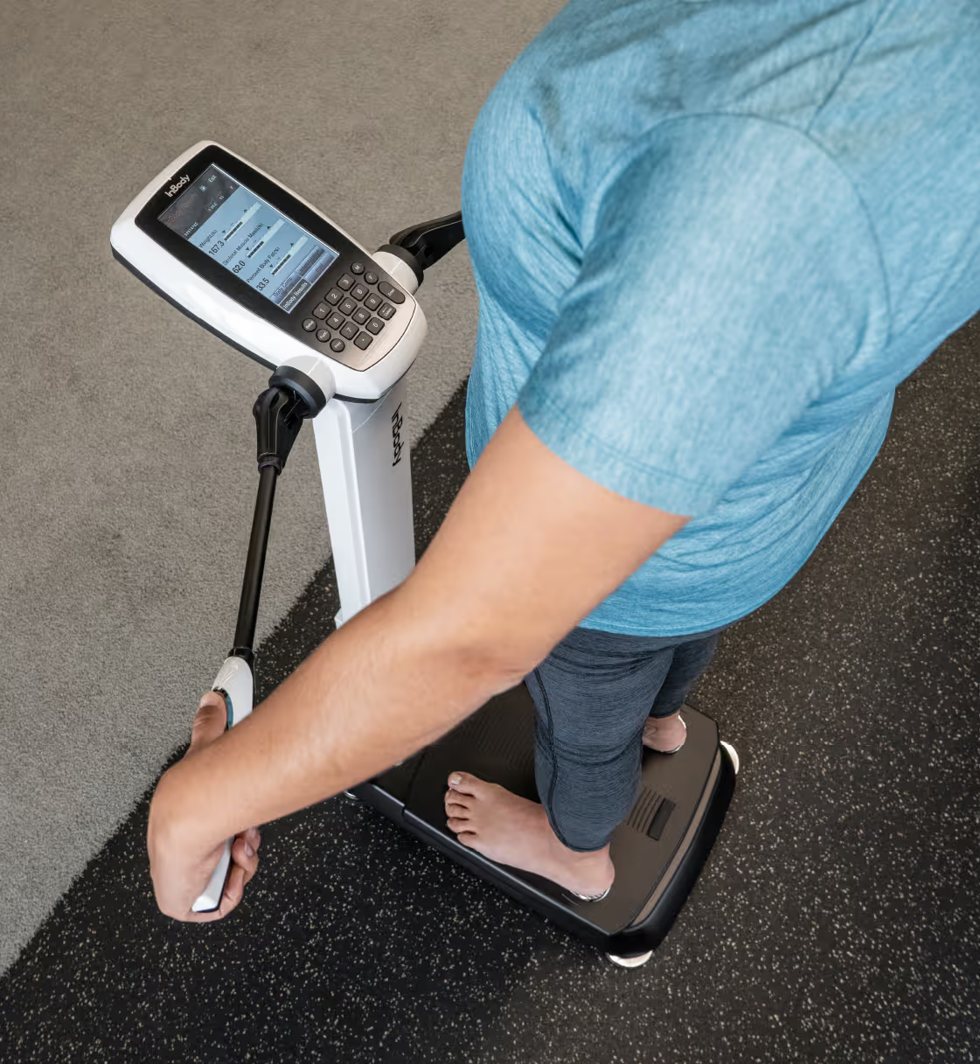
Beyond the scale
Your weight is a single number, and InBody shows what that number is made of.
That detail matters in endocrine care. Thyroid hormone, insulin, estrogen, and testosterone each play a part in the balance of muscle and fat, so two people with the same weight can have very different body composition.
InBody gives your physician a measured baseline and a way to follow how your body responds to treatment over time.
Your results
What an InBody scan measures
Each scan prints a result sheet with these measurements.
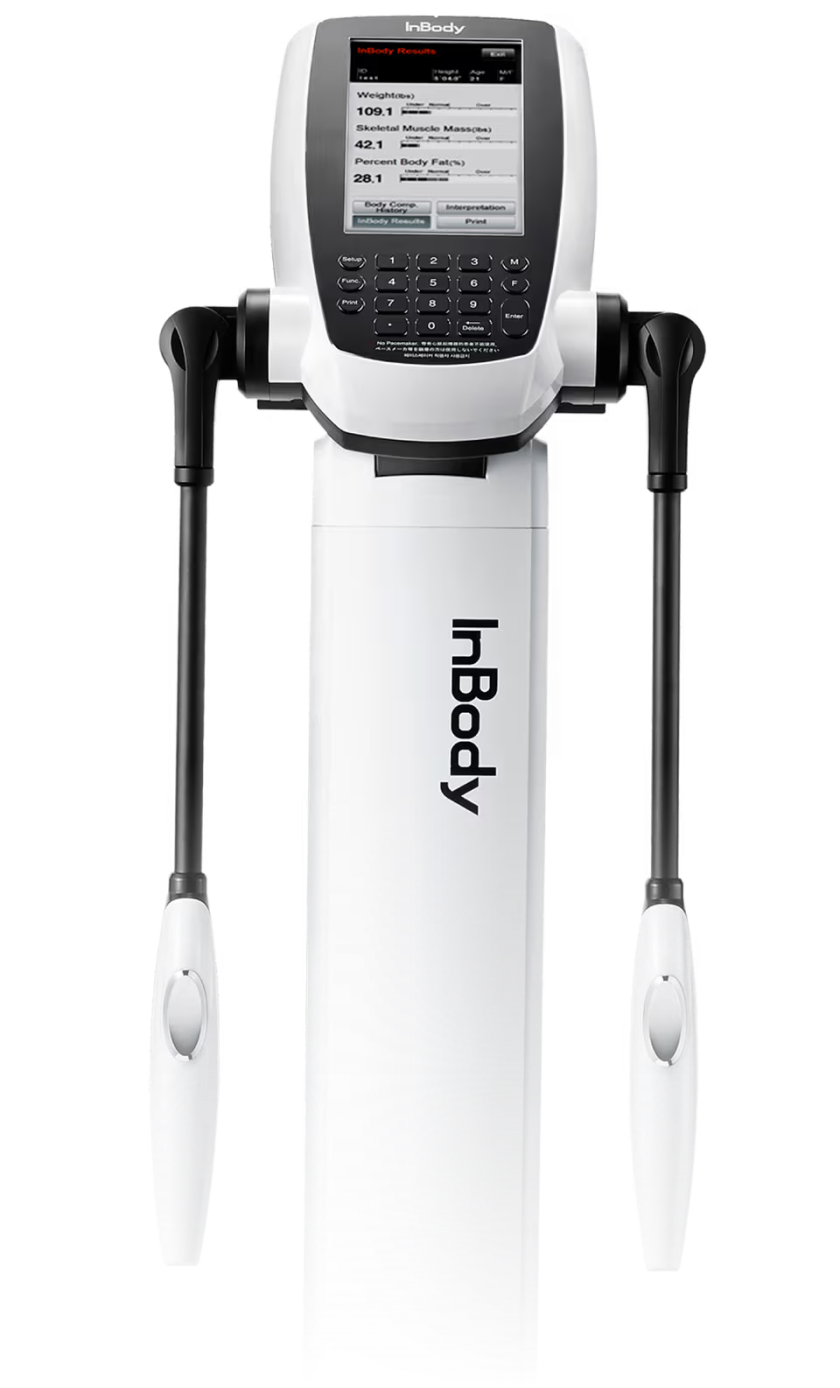
Skeletal muscle mass
The muscle attached to your skeleton, which strength training builds and which can decline with age or during weight loss.
Body fat mass and percent body fat
How much of your weight is fat, shown in pounds and as a percentage of your total weight.
Visceral fat level
An estimate of the fat stored deep in your abdomen, surrounding the organs.
Segmental lean analysis
Lean mass in each arm, each leg, and your trunk, which makes side-to-side differences easy to spot.
Total body water
The water in your body. Hydration affects InBody readings, so this number helps put the rest of your results in context.
Basal metabolic rate
An estimate of the calories your body uses at rest.
In endocrine care
Where body composition helps
Body composition adds useful context to many of the conditions we treat.
Weight management and GLP-1 medications
Weight that comes off can include muscle as well as fat, and that holds true with GLP-1 medications. Repeat scans help show how much of the change comes from fat and how much from lean mass.
Perimenopause and menopause
As estrogen levels fall, fat often shifts toward the midsection while muscle gradually declines. A baseline scan gives you a point of comparison as those changes unfold.
Diabetes and insulin resistance
Visceral fat is closely tied to insulin resistance. Tracking your visceral fat level shows how it responds to treatment and to changes in diet and activity.
Muscle and healthy aging
Muscle is one of the main places your body uses glucose, and it supports strength and balance as you get older. Following it over time makes gradual loss easier to catch.
Comparing methods
How InBody compares with a DEXA scan
Both tests estimate body composition through different methods, so each one’s results should be compared with earlier results from the same test.
| InBody | DEXA | |
|---|---|---|
| How it works | A low-level electrical current, with no radiation | Low-dose X-rays |
| What it estimates | Fat, muscle, and body water | Fat, lean tissue, and bone mineral |
| Where it fits | Quick in-office testing that works well for tracking trends between visits | Detailed regional assessment and an established clinical reference, including for bone density |
Hydration can affect both tests, InBody in particular, so consistent preparation before each scan matters. A change in lean mass doesn’t always mean a change in muscle, which is why your endocrinologist reads these numbers in context.
Your visit
What to expect
- 01Step onto the platform barefoot and hold the hand electrodes.
- 02Stand still while a low-level electrical current measures your body composition. The scan takes about a minute.
- 03Your result sheet prints as soon as the scan finishes.
- 04Go over the results with your endocrinologist, who can compare them with future scans.
Before your scan
- Wait at least three hours after your last meal.
- Skip exercise beforehand, and schedule your scan after you’ve recovered from a hard workout.
- Drink fluids as usual the day before, and have some water about an hour ahead of time.
- Use the restroom just before testing.
- Wear light clothing, and plan to remove your socks and jewelry.
- For repeat scans, come in at the same time of day as your first one.
If you have a pacemaker, defibrillator, or other implanted electronic device, tell our staff before your scan. InBody testing isn’t recommended with these devices.
Questions
Frequently asked questions
What is an InBody scan?
An InBody scan is a body composition test that estimates how much of your body is fat, muscle, and water. It uses bioelectrical impedance analysis, which passes a low-level electrical current through the body, and it takes about a minute with no radiation.
How is InBody different from a scale or BMI?
A scale and BMI work from your total weight and height alone. InBody separates that weight into muscle, fat, and water and estimates visceral fat. In 2023, the American Medical Association adopted policy recommending that BMI be used alongside other measures, including body composition and visceral fat.
Does an InBody scan replace a DEXA scan?
No. The two tests use different methods and serve different purposes. InBody is well suited to tracking changes between visits, and DEXA uses low-dose X-rays and remains the standard test for bone density.
How do I prepare for my scan?
Wait at least three hours after eating, avoid exercise beforehand, drink fluids as usual, and use the restroom right before testing. For repeat scans, keep the time of day and preparation the same so your results compare accurately.
Who should not have an InBody scan?
InBody testing isn’t recommended for anyone with a pacemaker, defibrillator, or other implanted electronic medical device. Let our staff know before your visit if this applies to you.
How often should I have a scan?
That depends on your goals and treatment plan. Your endocrinologist can recommend a schedule, and keeping test conditions consistent makes each comparison more useful.
Ready to look past the number on the scale?
Current patients can ask about an InBody scan at their next appointment. If you’re new to The Endocrine Center, our membership team can walk you through concierge care and answer your questions.
Prefer to talk first? Call 703-873-7425.